


Tourists meet BIOAQUAE
It may seem unusual to take a three-hour walk along a steep ascending path going to an alpine lake selected as your hiking destination point and find three young people wearing yellow bibs and seemingly shouting meaningless words at one another…
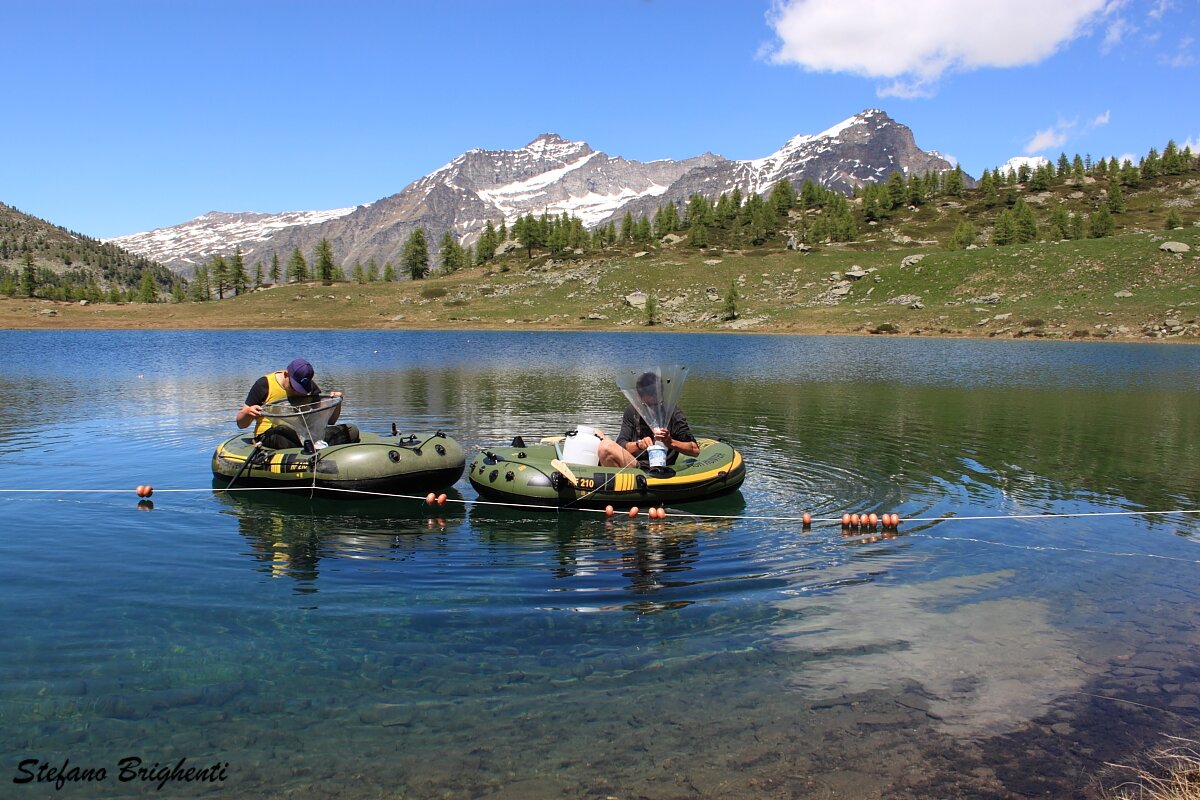
One young man standing on the lake shore seems to be writing on his notebook a poem inspired by the splendid scenario of rocks and water that unfolds before his eyes. The other two are in an inflatable dinghy in the middle of the lake (but aren’t they cold?): one appears to be scrutinising the surface of the water, looking for something (but what is he releasing from his hand? It looks like a fishing net...) and, when he finds it, screams out his message (PG01021...metres deep...alive...peaceful!) soon followed by the other young man who shouts in his turn words that sound like measures (21 centimetres...120 grams...). Can they possibly be fishing? In a National Park of all places? Are they crazy? The third young man on the shore keeps writing and is so focused on trying to catch all the words coming from his two mates on the dinghy, he does no realise that a small crowd of tourists has formed behind him, intrigued by the strange scene and perhaps annoyed by the fact that their chosen destination point has turned out to be so noisy... a visible signpost nearby declares that an intervention for the removal of alien fish is being carried out at the request of the Park management authorities. The group’s annoyance is appeased when the young man lifts his eye off his notebook, goes up to them, hands out booklets and explains the purposes and the significance of the work they are doing for the restoration of the ecosystem.
Interacting with visitors has always been part of our job, and, whenever we have a chance to do so, we personally hand over the booklets illustrating the trout eradication project. In this manner we were able to interact with many people and evaluate their emotional and rational reactions to the eradication of the brook trout. The most frequently asked questions were about the reason why a natural park wanted to remove fish species from an ecosystem: various excursionists, in fact, were not aware that no fish lived at such high altitudes and the fish species that were introduced had a strong ecological impact on an environment only seemingly devoid of life. So they wanted to know who had introduced the brook trout into the lakes. Had it really been the Park? And why? It was done because no scientific knowledge on the impact of alien species on an ecosystem was available at the time, when the Park decided for the introduction, few decades ago. This problem affects many alpine lakes and the Park authority decided to analyse it and study it in depth within its territory prior to getting the eradication intervention underway.
Numerous questions and objections were voiced regarding the fish catching modalities and the reason why the Park did not choose to liberalise sports fishing and let it go on until all the trout had been removed. Indubitably, this modality would have been cheaper than making use of fishing nets and electrofishing, but would not have solved the problem, since there was a need for incessant fishing activities encompassing all fish size classes.
Is the brook trout edible? This was the most frequent question we heard. Amazed by the fact that we did not even know what brook trout meat tasted like, the tourists then inquired about the fate of the fish caught during the summer months: the otters in the future Aquatic Ecosystem Conservation Centre in Valsavaranche, and, to the extent feasible, public canteens.
Most excursionists reacted positively to the project. People asked whether we really expected to be able to remove all the fish and how long it would take, and also asked about the life of the researchers (no, we are not volunteers, madam, we get paid!) during the season in the field and our workloads, thereby showing they had a certain sympathy for us and, above all, had full trust in the research activities and management choices of the Park.
A small minority objected to the project because the fish are killed in the course of the eradication process. What sense is there in introducing a species and then removing it at one’s own convenience? Since the fish are thriving and the original living organisms have been eliminated, why not leave matters as they stand? The Park is full of bugs, frogs and lakes without any fish in them, so why not leave the brook trout stay in this particular location? Legitimate objections arising from non-negligible ethical concerns, reflecting a different view of the matter. However, natural resource management calls for choices that will favour certain species or certain habits to the detriment of others. The conservationist approach that gives precedence to the ecosystem and its functional integrity is radically different from the animalist approach that focuses on the interests of individual animals, possibly at the expenses of the ecosystem or the interests of many other species. Is it really worthwhile to sacrifice highly delicate habitats, unmatched the world over, with their extraordinary biodiversity, and therefore a multitude of living species, in order to preserve an allochthonous fish population, which, not unlike a strong pollution source, disrupts the biodiversity of the environment and banalises the ecosystem? These two drastically opposing views come to altogether different rational conclusions but share the same irrational basis: love for nature.
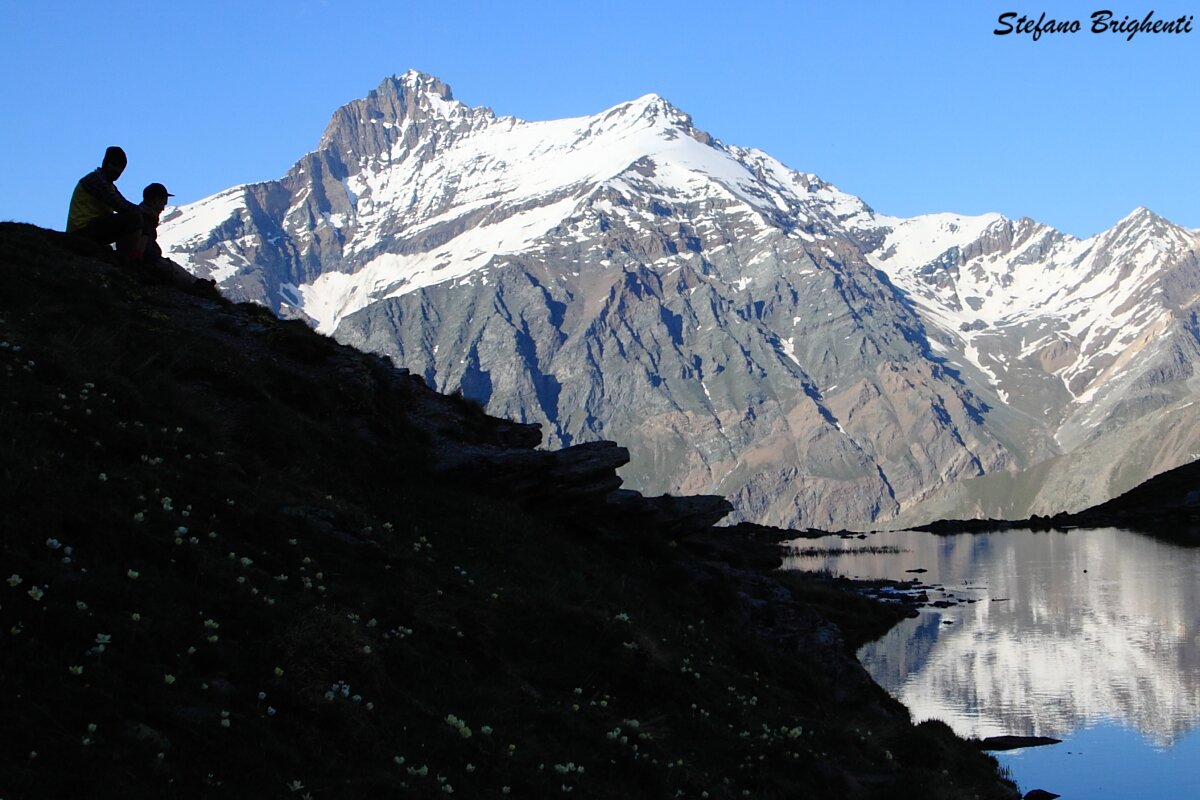
The sun is setting on the calm waters of the lake that reflect the cold rocks and the flowers whose colours wane in the shade. Silently, crisp, cool air caresses the researchers who are getting ready for dinner and a restful night sleep in their tents under the stars. There are no excursionists left, they’ve have all gone back to the valley floor and the mountain feels uninhabited. No lights, just the sounds of flowing water and a few isolated marmot calls... in the distance, the tingling of sheep bells, as the herd bleat their goodnight.
Stefano Brighenti, LIFE+BIOAQUAE project technical collaborator

