


The common frog
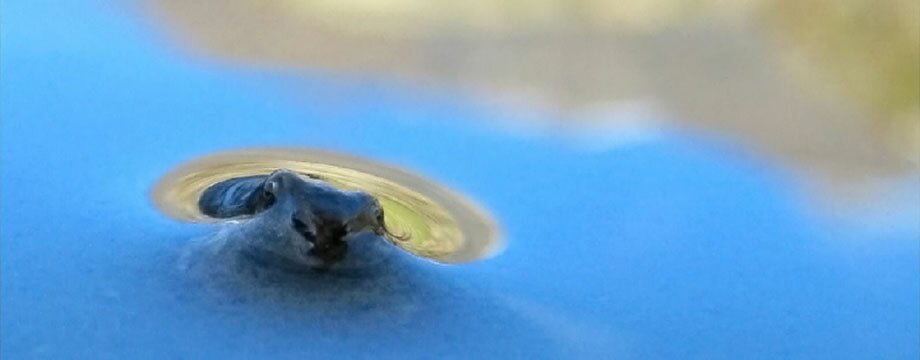
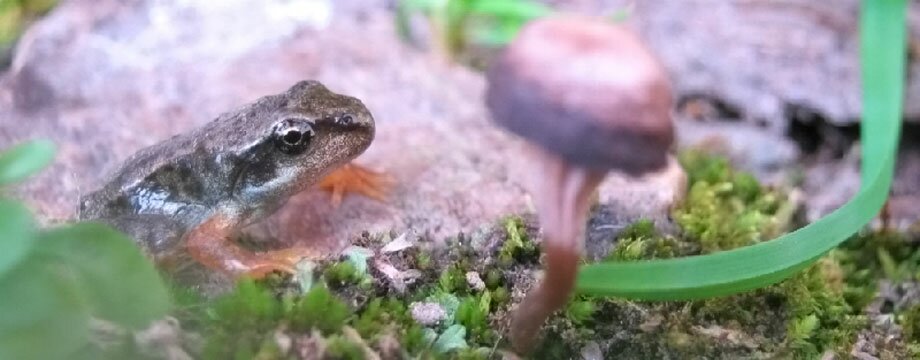
Walking along the paths of the Park it is not unlikely to come across the common frog (Rana temporaria) and, in the early summer, it is fun to stop on the banks of mountain lakes and ponds and watch a multitude of tadpoles undertaking the extraordinary mutation that will enable but a few of them to leave their aquatic home...

But the spectacle of nature oftentimes loses its enormous value in our eyes, especially when we get to observe it without too much effort and it takes place on the humble stage of small-sized players. The survival of the common frog in the alpine setting, in fact, is almost incredible: in Europe no other amphibian inhabits the most extreme altitudes and latitudes, and the common frog communities living on the south-facing slopes of the Orco Valley occupy the “highest” habitat the world over, at an altitude of over 2,800 m. In the course of its evolution, Rana temporaria has acquired the extraordinary capacity to survive through the alpine winter and colonise the pools of water, where, during the warm but short-lived alpine summers, it can find a safe environment, free from natural predators, where to lay its eggs.
As is often the case, it is the misguided intervention of man that breaks the spell. With the introduction of predatory fish species in the alpine lakes, the common frog is now up against an enemy it has no means of defence from. The predators’ impact is felt in particular during the most delicate phase in a frog’s lifecycle, when the newly introduced fish species gorge on the tadpoles. It stands to reason that the presence of fish will soon lead to the total disappearance of the tadpoles – and therefore of the frogs – especially from the lakes and ponds that provide no shelter for the prey (e.g., aquatic and shore vegetation). If we consider that the ecological impact on the common frog is only the visible tip of the waves of extinctions of equally extraordinary local species that have been triggered by the introduction of the fish, we can easily see how the presence of this predator is incompatible with the preservation goals pursued by the Park.
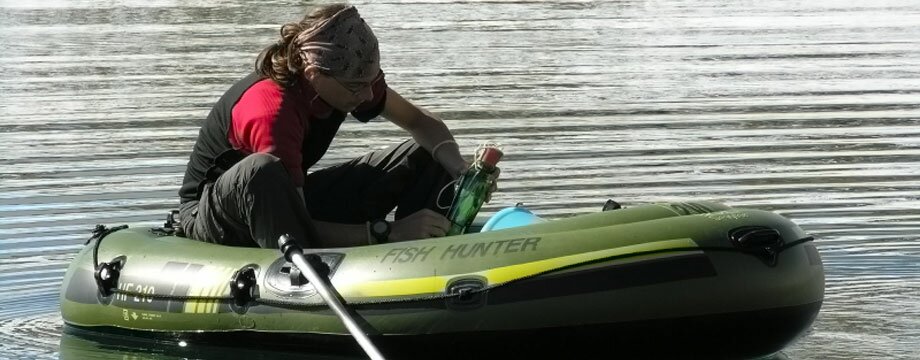
Over the last few decades, fishery management practices outside the Park have led to a virtually systematic disruption of the ecosystems of high altitude lakes, over the entire alpine arch and in many mountain chains all over the world. The situation within the Park is less severe, as only a few natural lakes have been invaded by the brook trout (Salvelinus fontinalis), a species originating from North America, and the introduction of new fish species and sports fishing are prohibited. However, alien species introduction into high altitude lakes and streams is a practice that should be regulated so as to take into due account the ecological problems entailed, even though its impact is felt on the limited scale of small aquatic organisms. With its programme for the eradiation of the brook trout from four alpine lakes, the Park aims not only to reinstate the biodiversity of these environments, but also to propose a new model that might lead to a new naturalistic approach to fishery management.
Taken from "Voci del Parco"

